
01VIEW THE FAMILY ↘
uPVC windows
70 AD · 76 AD · 76 MD · 88 MDFour main options, from the economical 70 mm system to the premium 88 mm platform.

Precisely engineered Kömmerling systems for quiet, bright rooms where energy use stays under control.
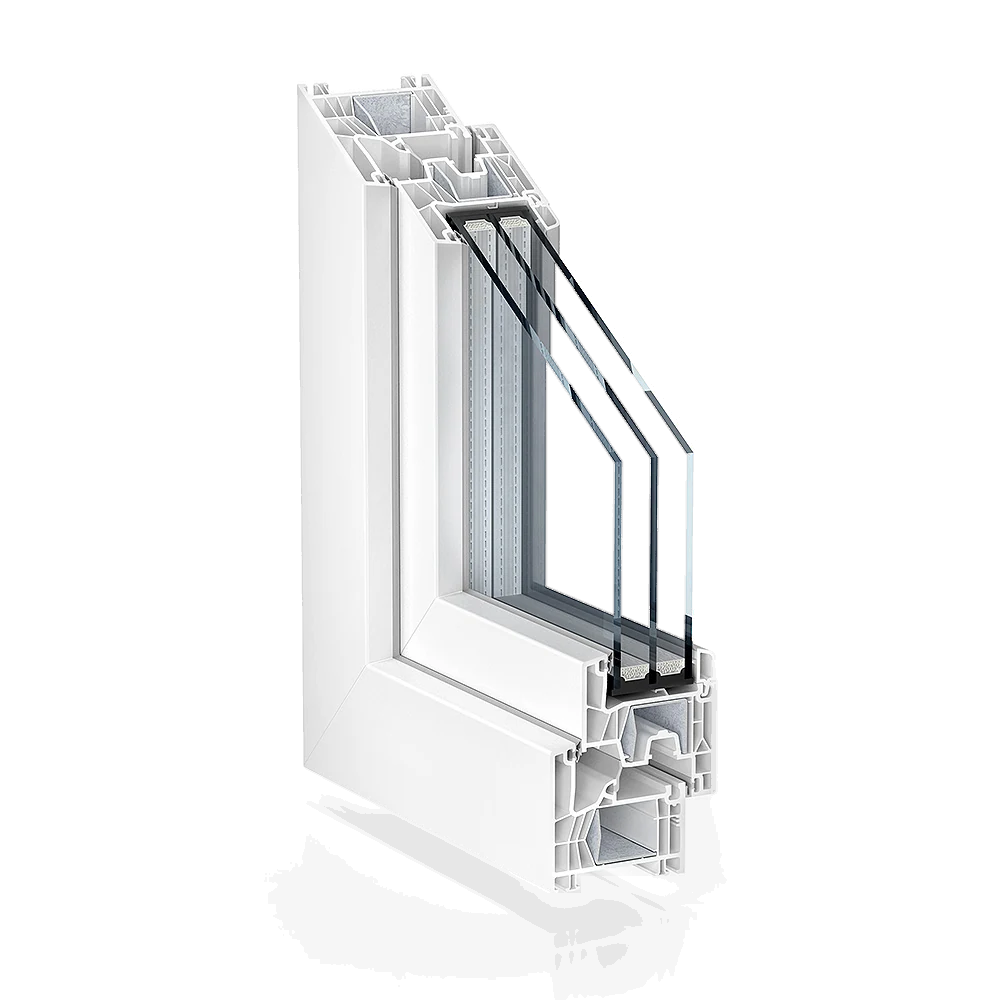
The Kömmerling range is not simply a ladder of profile depths. Windows, HST lift-and-slide doors, sliding systems and front doors each work differently, so they should not be seen as interchangeable variants of the same profile.
Four main options, from the economical 70 mm system to the premium 88 mm platform.
HST systems for large glazed openings, kept separate from conventional sliding systems.
Sliding windows and doors, each with its own operating principle, geometry and applications.
Door types, opening directions and AluClip versions, in a product group of their own.
The depth in millimetres is only the start. The cards set out the sealing, the chambers, the maximum glass thickness and why a particular system is the right choice for a project.
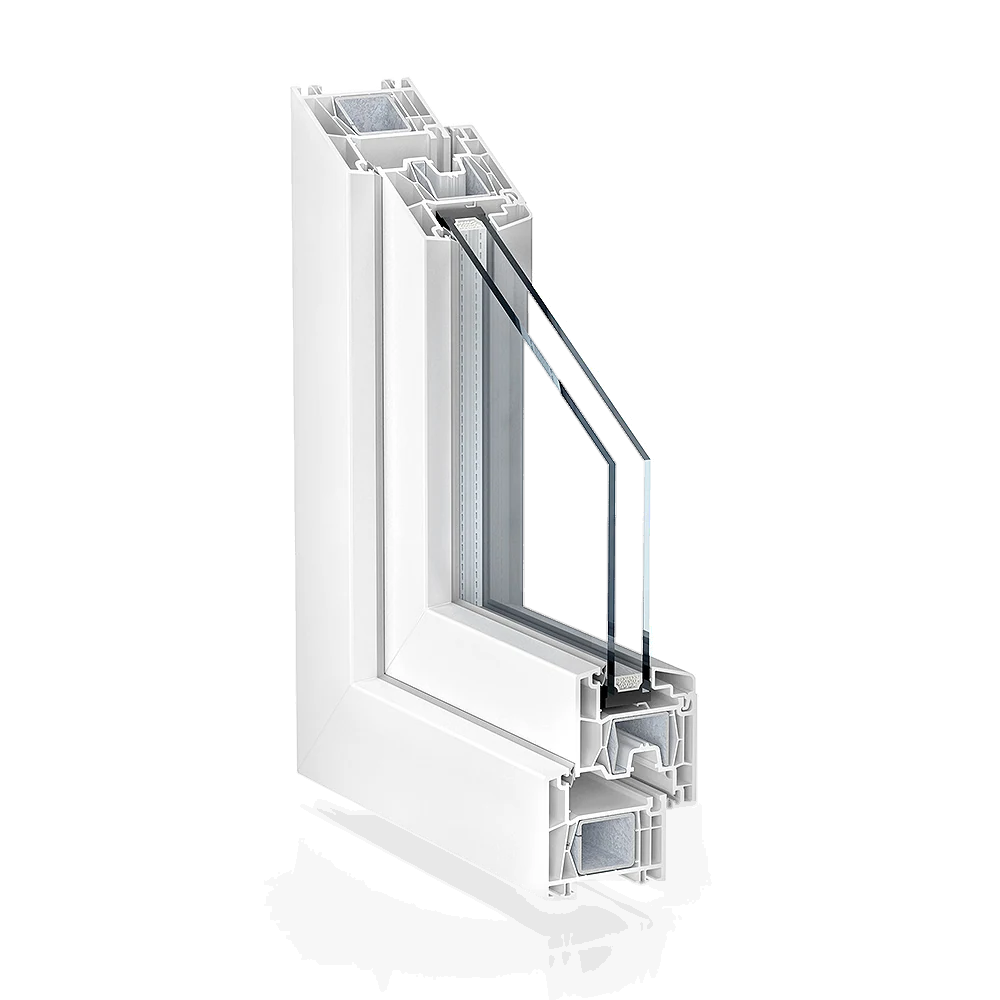
A clear entry point to the Kömmerling range
Choose Kömmerling 70 AD when the project needs a proven uPVC window with a shallower system depth for standard residential openings on a sensible budget, without moving up to a deeper platform unnecessarily.
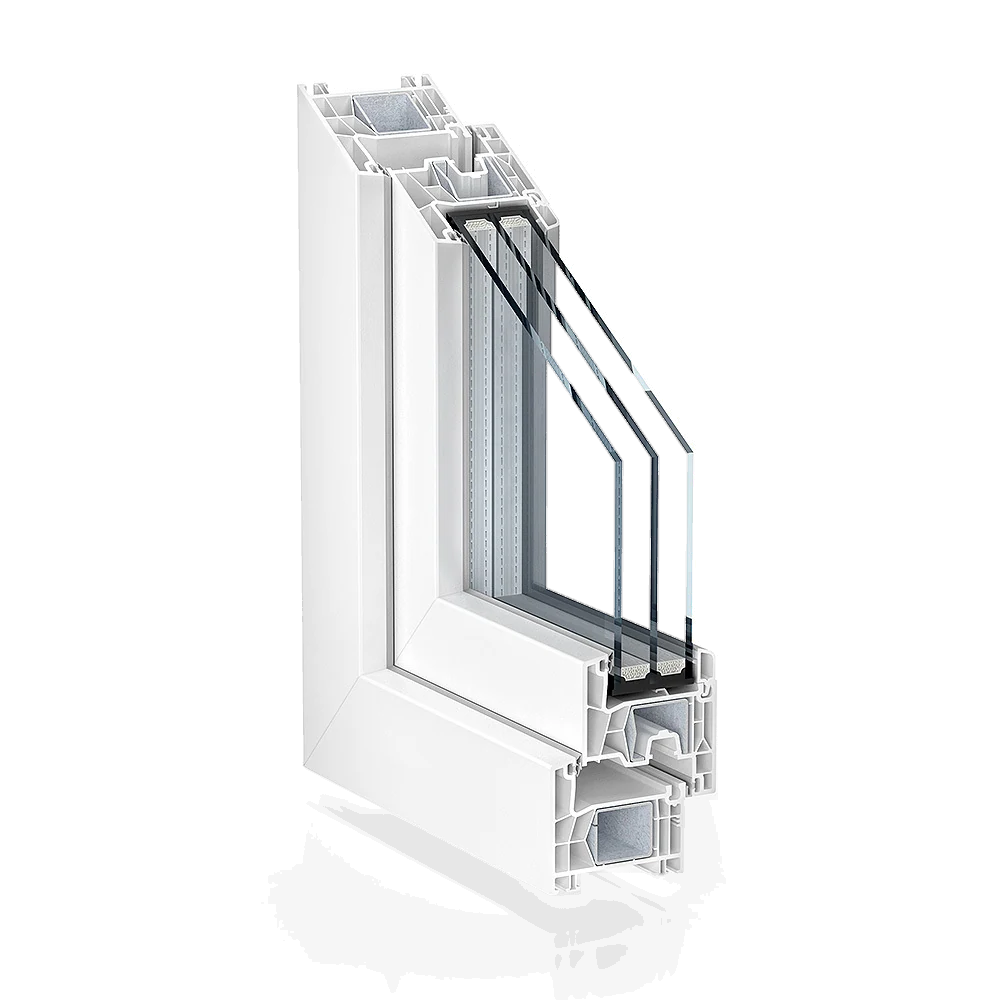
The widest range of practical uses
Choose Kömmerling 76 AD when you want a contemporary 76 mm platform, a wide choice of glass and a good balance of thermal performance, design options and cost for new build or renovation.
When the sealing detail comes first
Choose Kömmerling 76 MD when you want to keep the economical 76 mm depth but add a centre seal and three sealing levels, for a tighter building envelope and more comfortable rooms.
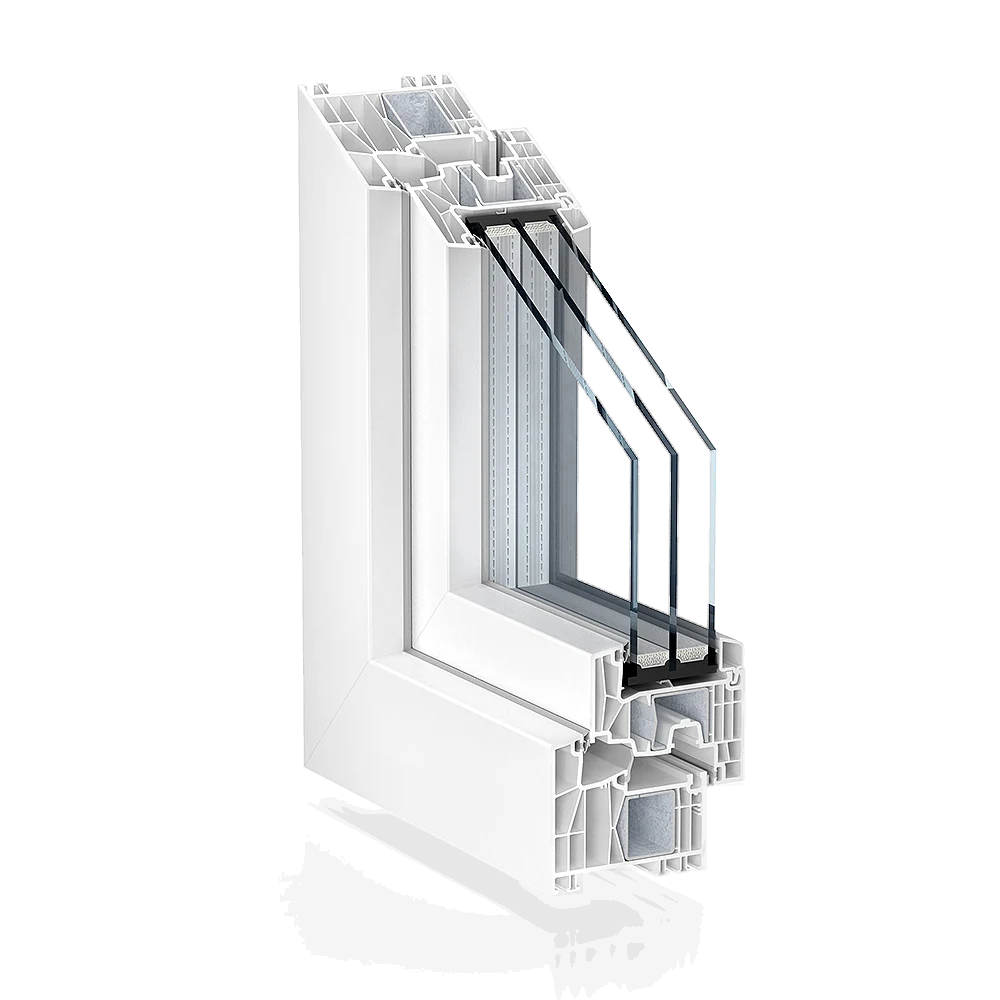
For the most demanding building envelope
Choose Kömmerling 88 MD when high thermal insulation, thick performance glass, stability and the project’s long-term energy target matter more than the lowest upfront cost.
Important note: the Uf values shown apply to the profile in the version declared by the manufacturer. The Uw of the complete window is confirmed only once the size, glass, spacer, reinforcement and opening configuration are known.
AluClip, AddOn and the ventilation options are not separate system depths. They are versions of the same 76 mm base platform, some with extra features.
A versatile platform for a wide range of contemporary uPVC windows.
A centre seal for a tighter joint between frame and sash.
PremiDoor 76 and PremiDoor 88 are not wide windows but true lift-and-slide systems. The sash is first lifted off its seals, then slides parallel to the fixed panel. That is why they have their own threshold, hardware and junction geometry.
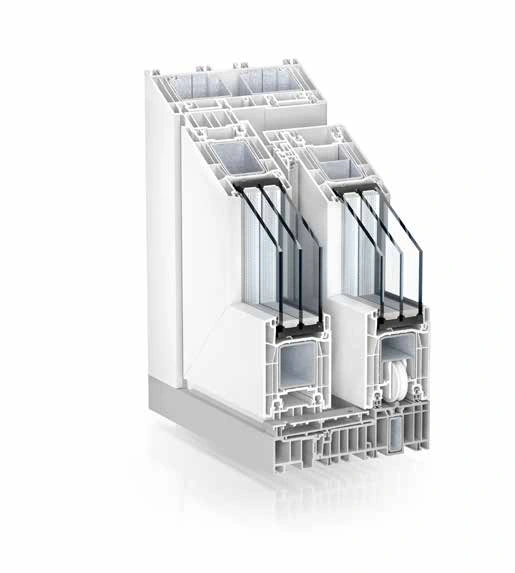
A large opening, with the system depth kept in check
Choose PremiDoor 76 when the project calls for a true lift-and-slide door, a large glass area and step-free access, but with a more economical construction depth that also suits renovation.
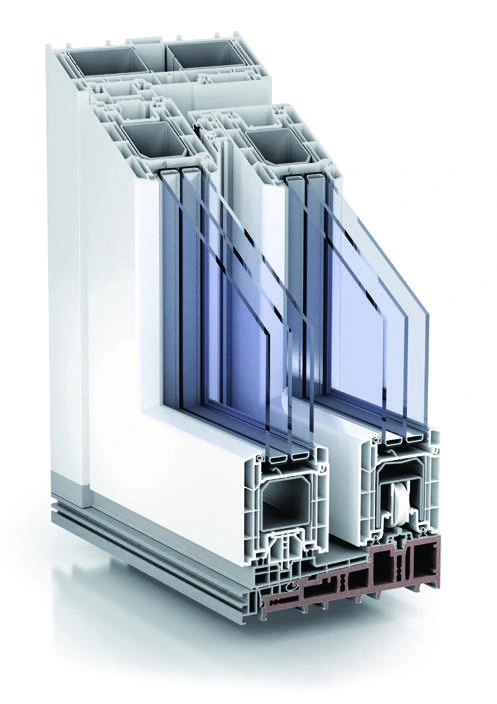
For the tallest, most thermally demanding HST doors
Choose PremiDoor 88 when maximum door height, thicker performance glass, three sealing levels and a long-term energy target matter more than the lowest upfront cost.
Standard · AluClip · Lux · Lux AluClip
The technical values shown apply to the basic HST version. Sizes, glazing and thermal values of the Lux and AluClip variants are confirmed separately.
In the fixed glazing the conventional sash profile is left out, so the sightline is slimmer and more daylight comes in.
It does not change the basic lift-and-slide principle; it adds an aluminium outer surface and a wider choice of finish colours.
Choose the 76 or 88 system first. Then choose Standard or Lux geometry. AluClip is an outer finishing layer and can be combined with either geometry.
PremiSlide 76 and PremiLine 80 save space because the sash does not open into the room, but they do not work in the same way. The first uses special ECO SLIDE hardware and all-round sealing; the second is an economical parallel system on tracks.
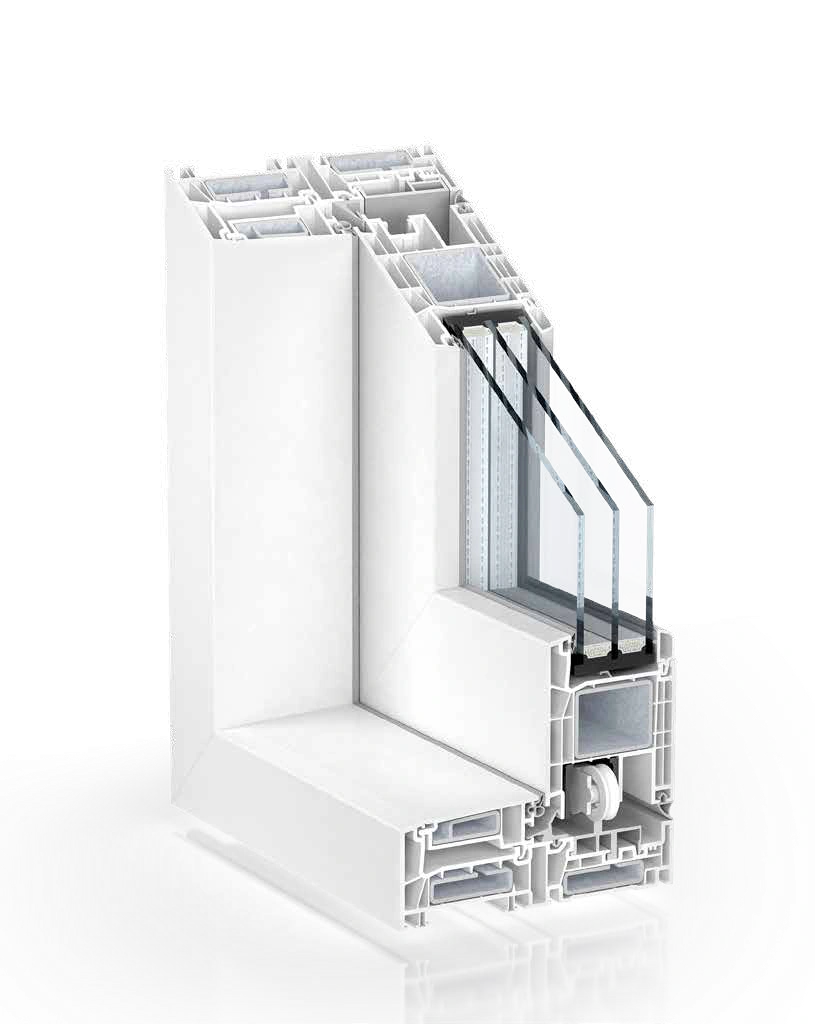
When you want a sash that slides instead of swinging into the room
How it works: ECO SLIDE hardware moves the sash sideways off its seals and guides it into a sealed closed position.
Choose PremiSlide 76 when a window or a lighter sliding door has to save space inside but keep all-round EPDM sealing, the option of triple glazing and controlled ventilation in a secure position.
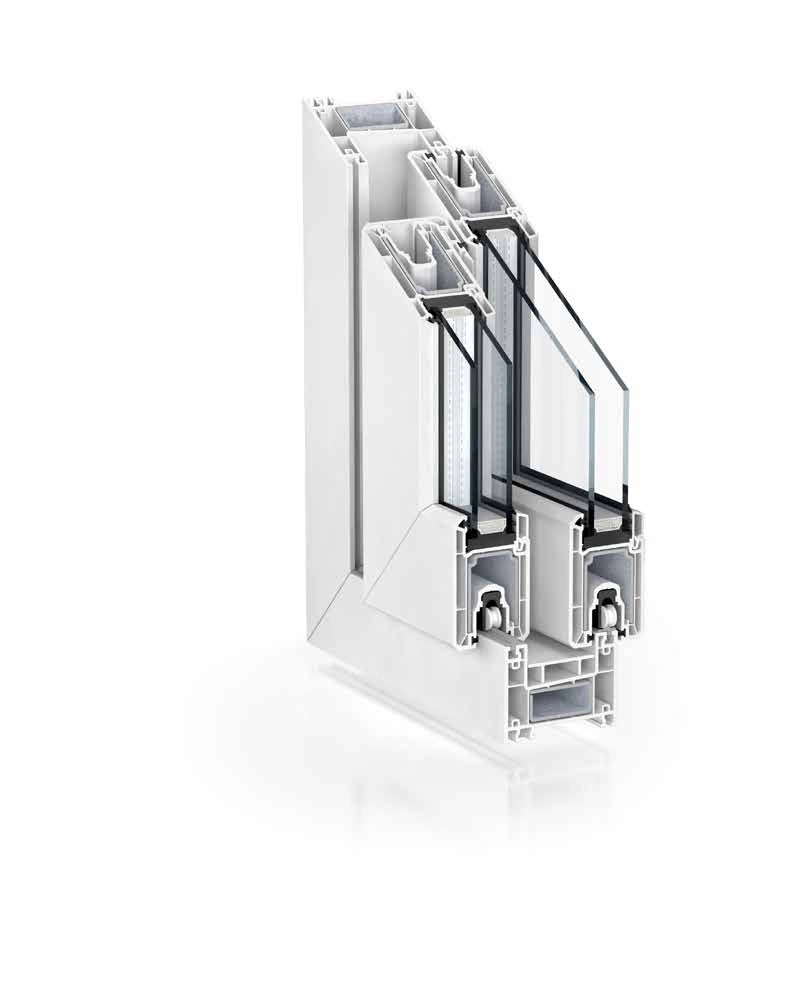
For a simple, quiet, space-saving unit
How it works: the sashes run in parallel along steel tracks on uPVC rollers.
Choose PremiLine 80 when the priorities are simple parallel sliding, quiet operation, a wider choice of panel layouts and an economical sliding window or door without a special press or lift mechanism.
The choice depends on the mechanism, the sealing, the glass and the planned panel layout.
ECO SLIDE hardware guides the sash sideways and presses it into the closed position. It is designed for openings where you want to save space and still need tighter sealing, triple glazing and a ventilation position.
The sashes slide along tracks without being lifted. It is an economical, quiet system that suits a wide range of sash layouts, but it does not match the performance of PremiSlide or HST.
When the project needs a large lift-and-slide door, a heavy sash that lifts before it slides and a threshold designed for HST, PremiDoor 76 or PremiDoor 88 is the better choice.
First we settle the operating principle and the size of the opening. Only then do we choose the system, panel layout, glass and finish. The profile name is not where the decision starts.
Kömmerling 76 and 88 are the base door platforms. Opening inwards or outwards is a functional choice, while Standard, AluClip, AluClip Plus and AluClip Zero describe the finish or a special architectural version – not a separate system depth.
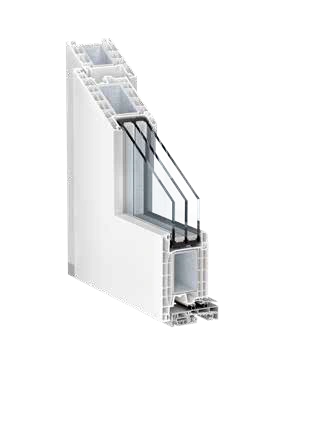
A sensible balance of insulation, options and cost
Choose Kömmerling 76 when the entrance needs a proven door construction, a thermally broken threshold, infill panels or glass up to 50 mm and a wide choice of standard and aluminium-clad versions, without moving up to the deeper 88 mm platform.
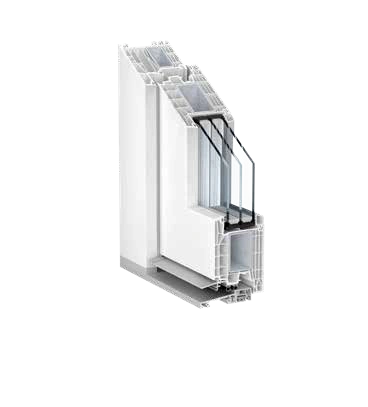
For a more demanding entrance, thicker infill and a premium building envelope
Choose Kömmerling 88 when the building has a demanding energy target and the front door needs a deeper six-chamber platform with an 88 mm system depth. It is the right choice for projects where long-term thermal and structural headroom matters more than the lowest upfront cost.
Important technical limit: the figures in the tables refer to the standard uPVC versions. Sizes and infill panels of the AluClip variants are checked separately. RC2 is a security class the system can achieve, and Ud applies to the complete door. Both values are confirmed only for the actual size, reinforcement, threshold, lock, hardware and the chosen infill or glass.
The depth and the performance level the project needs come first. Only then do we choose the opening direction, threshold, infill and external finish.
The right opening direction depends on the space, the approach to the door, any canopy, means of escape and the door’s role in the building. Inward- and outward-opening doors each have their own system geometry, so the direction must be specified before we prepare the quote.
AluClip and AluClip Plus keep the uPVC base and add an aluminium surface on the outside, with a wider choice of finishes. The cladding changes the exterior, not the system depth.
AluClip Zero is a special variant of Kömmerling 76 for a cleaner, flush exterior and thicker door infill panels. It is shown as a branch of the 76 family, not as a separate base profile.
The profile is only the core. The threshold, reinforcement, lock, hardware, type of infill or glass and the actual size together determine the security, weathertightness and Ud of the complete door.
88 is not simply a better 76. Kömmerling 76 is the more economical all-round base; 88 comes in when the project justifies a deeper platform and more thermal headroom. Opening direction and AluClip versions are chosen within the selected family.
Both systems have a system depth of 76 mm. AD has two sealing levels, while MD adds a centre seal, giving three sealing levels in all. The right choice depends less on the name than on the window as a whole, the glass and the project requirements.
Not necessarily. A deeper profile leaves more room for chambers, reinforcement and thicker glazing, but the sensible choice for each opening depends on its size, the building’s location, the energy target, the hardware, the glass and the budget.
No. Uf describes the thermal transmittance of the profile, Ug that of the glass and Uw that of the complete window in a given size and configuration. That is why a Uw value should not be quoted unless the exact window has been specified.
Yes, with compatible AluClip versions. They keep the uPVC core on the inside, while the external aluminium cladding widens the choice of finish colours and changes the look of the facade.
PremiDoor 76 is the more economical HST platform, with a shallower system depth, and it also suits renovation projects. PremiDoor 88 is the deeper premium system for taller doors, thicker glass and a more demanding energy target.
Lux is the version with a slimmer sightline in the fixed glazing. It is not a different way of opening: the moving sash still works on the lift-and-slide (HST) principle, while the fixed panel gets a larger area of glass.
PremiSlide 76 uses ECO SLIDE hardware, which guides the sash into a sealed closed position and takes glazing up to 50 mm thick. PremiLine 80 is an economical parallel sliding system on tracks, with a wider choice of two-, three- and four-panel layouts.
No. On an HST system the handle first lifts the heavy sash off its seals, and only then does it slide. PremiSlide uses its own ECO SLIDE slide-and-press principle, while PremiLine sashes slide in parallel on tracks.
Kömmerling 76 is a versatile five-chamber door platform for a wide range of homes, while Kömmerling 88 is a deeper six-chamber platform for a more demanding energy target and thicker infill panels. The final choice is confirmed against the size, infill panels, threshold, hardware and opening type.
No, they are not new base profiles and do not add a new system depth. AluClip adds external aluminium cladding to a compatible uPVC door platform, while AluClip Zero is a special flush architectural version within the Kömmerling 76 family.
Send the sizes, panel layouts, opening type and your glass requirements. LUMORA brings the right system, reinforcement, hardware, threshold and installation together in one specification you can check.
Request a recommendation